Green Bin Program: Coming April 2027

Introducing the Green Bin Program

The Municipality of Strathroy-Caradoc is introducing a new Green Bin Program in April 2027 to help residents divert organic waste from their regular garbage.

Residents will receive weekly garbage and Green Bin collection, with bi-weekly recycling collection.

This page will be your central source for information about the new program, including what can go in your Green Bin, how collection will work, frequently asked questions and important updates as we prepare for implementation.

Have questions?

We want to hear from you! Share your questions through this page or join us at an upcoming Public Education Session to learn more about what the Green Bin Program means for your household.

  • Public Education Sessions

    Residents are invited to attend an upcoming Public Education Session to learn more about the Green Bin Program coming to Strathroy-Caradoc in Spring 2027.

    These sessions will provide an opportunity to learn about the upcoming program, understand what to expect and ask questions directly to Municipal and Waste Management staff.

    Strathroy

    • Date: Monday, November 30, 2026

    • Time: 6:00–7:30 p.m.

    • Location: Gemini Sportsplex – Multi-Purpose Room, 667 Adair Blvd, Strathroy

    Mount Brydges

    • Date: Wednesday, December 2, 2026

    • Time: 6:00–7:30 p.m.

    • Location: Caradoc Community Centre - Hartford Room, 565 Lions Park Dr, Mount Brydges

    Both sessions are open to all Strathroy-Caradoc residents. Residents are welcome to attend whichever session is most convenient.

    We encourage residents to attend, learn more about the program and bring any questions they may have.

  • Why Does Organic Waste Matter?

    supporting image

    When we separate food scraps and other organic materials from our regular garbage, we help reduce waste, protect the environment and create valuable resources.

    Here are some of the benefits:

    Reduces greenhouse gas emissions
    When organic waste breaks down in a landfill, it produces methane, a greenhouse gas that contributes to climate change. Composting and other organic waste processing methods help reduce these emissions.

    Creates healthier soil
    Processed organic materials can become nutrient-rich compost that improves soil health, helps plants grow, retains moisture and reduces soil erosion.

    Keeps waste out of landfills
    Diverting organic materials from the garbage helps conserve landfill space and extend the life of existing landfills.

    Supports a healthier environment and community
    Compost can be used in gardens, parks, landscaping and restoration projects. Recovering organic materials also reduces the need for some chemical fertilizers and other non-renewable resources.

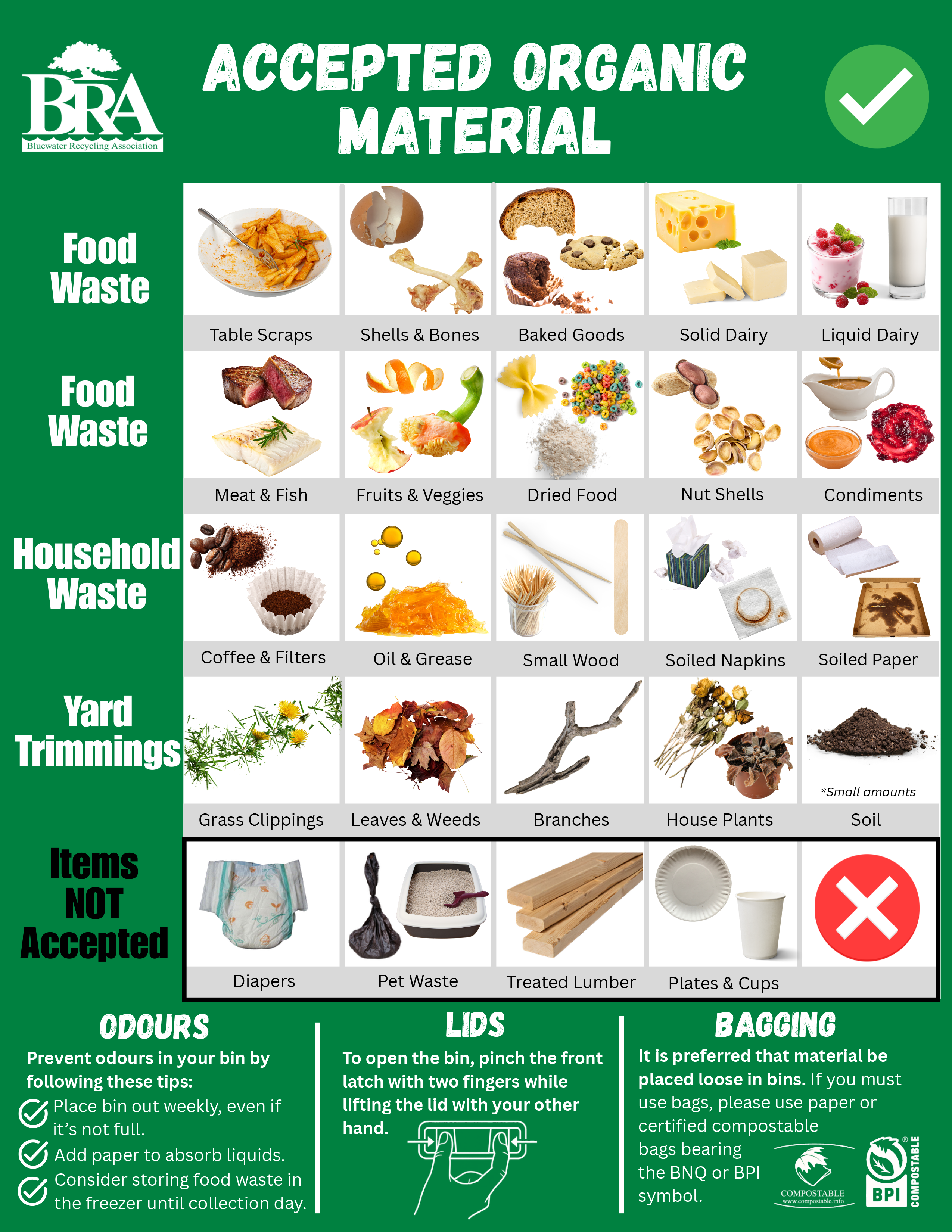
  • What Can Go in Your Green Bin?


  • Where Does Your Organic Waste Go?

    Ever wonder what happens to your food scraps after they're collected?

    Organic materials collected through the Green Bin Program in Strathroy-Caradoc will be transported to Try Recycling Inc. (TRY), a composting facility located at 21463 Clark Road, north of Sunningdale Road, in London, Ontario.

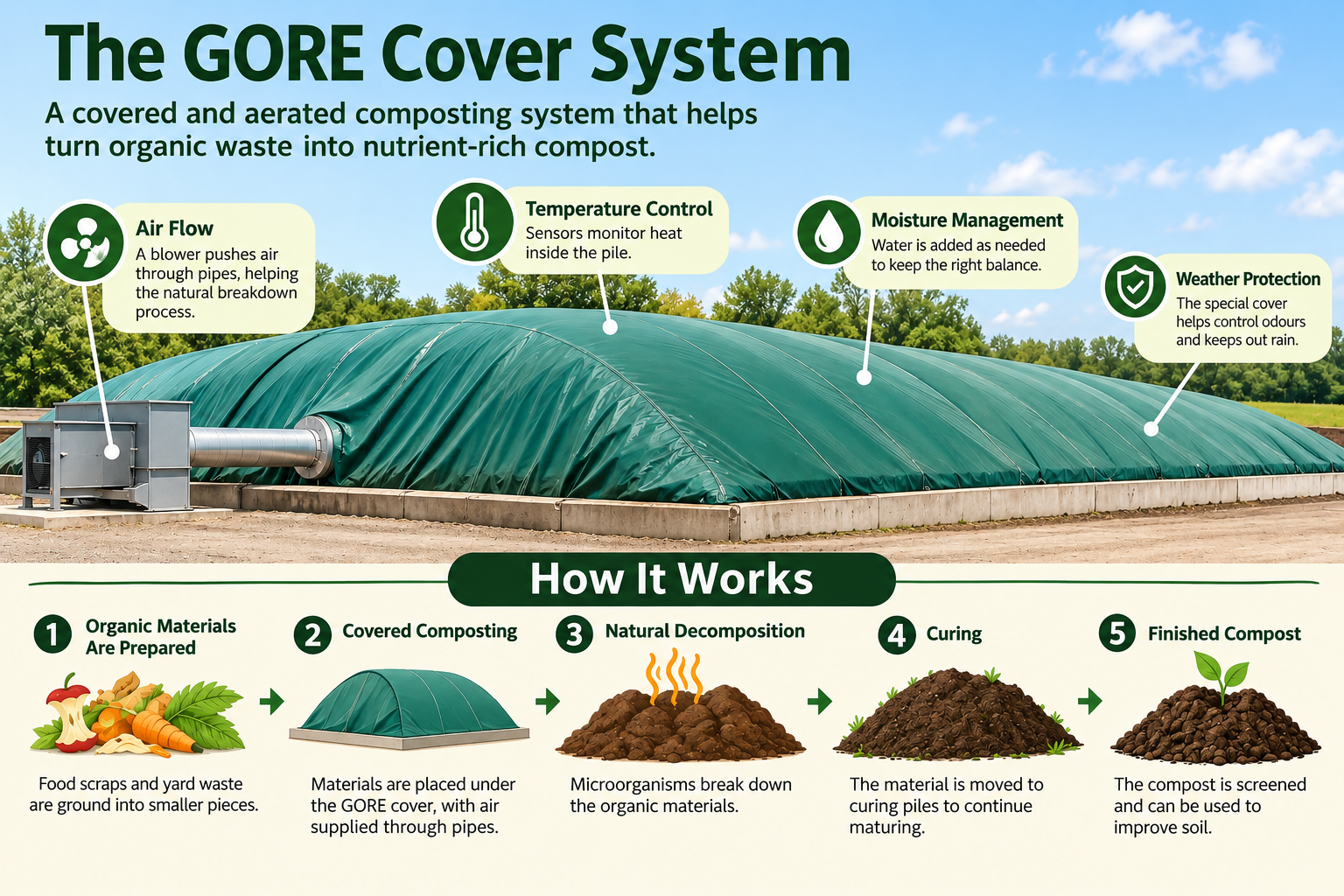
    At the facility, food scraps and other accepted organic materials are processed using the patented GORE Cover System. Through this process, organic materials naturally break down and are transformed into nutrient-rich compost that can be put to good use.
    How Does the Composting Process Work?

    1. Collection and Transportation

    Your Green Bin and Garbage Bins are collected weekly (in the same truck, but with separated compartments for garbage and organic waste) and then transported to TRY's composting facility.

    2. Preparation

    Organic materials are prepared for composting. They are ground into smaller pieces to help the materials break down more efficiently. Water is also added during this stage to help maintain the right moisture level.

    3. Covered Composting

    The prepared materials are placed in long, sealed composting bags or under specialized covers. TRY uses the GORE Cover System, which helps regulate temperature and moisture, manage odours and protect the composting materials from weather.

    Air is supplied through an aeration system, helping the natural decomposition process take place.

    4. Curing

    After at least eight weeks of covered composting, the materials are moved into curing piles for another four to nine weeks. This allows the compost to continue breaking down and mature.

    5. Screening and Finished Compost

    The finished material is screened to remove larger pieces and produce a more consistent compost product.

    What was once food scraps and other organic waste can now be used to improve soil and support plant growth.

    Try Recycling produces a finished compost that is bagged and sold at local retailers.

    Ever wonder what happens to your food scraps after they're collected?

    Organic materials collected through the Green Bin Program in Strathroy-Caradoc will be transported to Try Recycling Inc. (TRY), a composting facility located at 21463 Clark Road, north of Sunningdale Road, in London, Ontario.

    At the facility, food scraps and other accepted organic materials are processed using the patented GORE Cover System. Through this process, organic materials naturally break down and are transformed into nutrient-rich compost that can be put to good use.

    How Does the Composting Process Work?

    1. Collection and Transportation

    Your Green Bin and Garbage Bins are collected weekly (in the same truck, but with separated compartments for garbage and organic waste) and then transported to TRY's composting facility.

    2. Preparation

    Organic materials are prepared for composting. They are ground into smaller pieces to help the materials break down more efficiently. Water is also added during this stage to help maintain the right moisture level.

    3. Covered Composting

    The prepared materials are placed in long, sealed composting bags or under specialized covers. TRY uses the GORE Cover System, which helps regulate temperature and moisture, manage odours and protect the composting materials from weather.

    Air is supplied through an aeration system, helping the natural decomposition process take place.

    4. Curing

    After at least eight weeks of covered composting, the materials are moved into curing piles for another four to nine weeks. This allows the compost to continue breaking down and mature.

    5. Screening and Finished Compost

    The finished material is screened to remove larger pieces and produce a more consistent compost product.

    What was once food scraps and other organic waste can now be used to improve soil and support plant growth.

    Try Recycling produces a finished compost that is bagged and sold at local retailers.

Page last updated: 16 Nov 2026, 09:12 AM